Weather stations
Weather station accuracy: sensor placement and sync
Most «inaccurate» weather stations are accurately measuring the wrong spot. Where you hang the sensor decides the numbers, this guide is about choosing that spot, understanding the radio links, and knowing which errors are physics rather than fault.
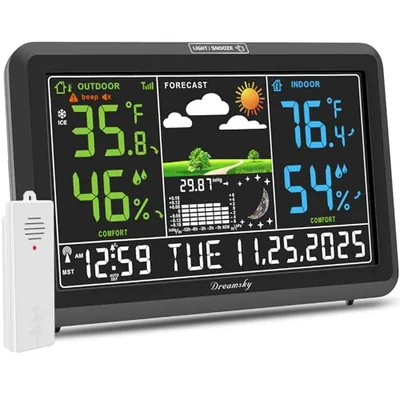
A sensor measures its own air, nothing else
The thermometer in the little plastic pod does one thing with real precision: it reports the temperature of the air touching it. Whether that number matches the weather report depends entirely on what that air has been doing, and the usual answer is: sitting against a sun-warmed wall.
This is the root of nearly every accuracy complaint we see. A sensor in afternoon sun reads ten or fifteen degrees high, honestly, because the air around it IS that hot. The official readings you compare against come from instruments in ventilated shade over grass, and nothing on your patio replicates that by accident.
So before judging the electronics, audit the spot. The rest of this guide is mostly about the spot.
| Model | Atomic sync | Sensors supported | Powered by | From |
|---|---|---|---|---|
| Weather Station with Atomic Clock | WWVB | 3 | Adapter + backup | $29.99 |
| Weather Station, 7-Inch Display | WWVB | 1 | Batteries | $29.99 |
| Weather Station, Color Display | WWVB | 3 | Adapter + backup | $36.54 |
| Atomic Weather Station, 2 Sensors | WWVB | 3 | Adapter + backup | $47.99 |
| Weather Station, Wireless Sensor | WWVB | 3 | Adapter + backup | $33.99 |
The placement rules, in order of importance
North side of the house, first and always: it sees the least direct sun. Under an eave or a porch roof beats open sky, because rain-soaked sensors read cold and wet electronics age fast. Head height or higher keeps it out of ground heat and snow banks.
Keep it off large thermal masses. A brick wall is a storage heater that radiates into the evening, a metal shed is a frying pan at noon. Give the pod a few inches of air gap on a fence post or a bracket rather than flat contact with any wall.
And keep it away from your own machinery: dryer vents, AC condensers, grills, chimneys. Each one writes fiction into the log at exactly the hours you glance at the display.
Comparing against the weather app, fairly
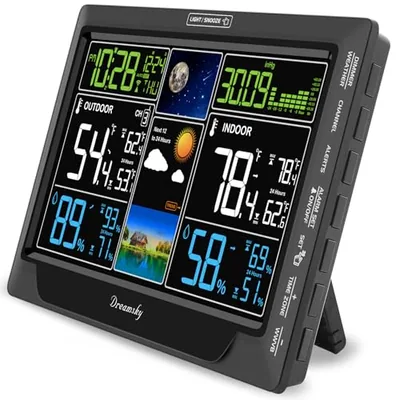

The app on your phone is not reporting your yard. It blends the nearest official stations, often an airport miles away, with a model's interpolation, and airports sit over mowed grass with instruments in aspirated shelters. Your patio differs from that reference by design, not by defect.
A fair comparison uses fair conditions: pre-dawn, calm, overcast if you can get it, when microclimates flatten out. If your sensor tracks the airport within a degree or two at 5 a.m. and diverges at 3 p.m., you are looking at siting and sun, not electronics.
Differences that persist under fair conditions are worth attention, in this order: check the pod is dry inside its shield, check the batteries, then compare against a simple glass thermometer hung beside it for an hour. Three checks, ten minutes, and you know which story you are in.
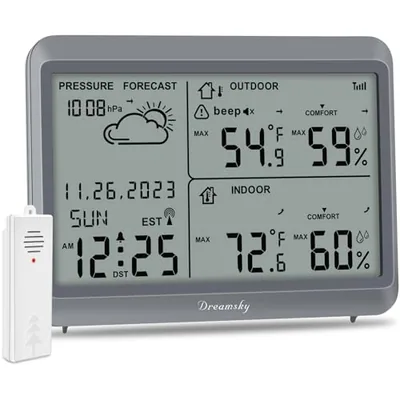
What a home station gives you that no app can is the trend line of your own microclimate: the frost pocket by the fence, the porch that holds heat past midnight. Once you stop expecting airport numbers, that local truth is the entire value.
Wireless range: what the spec means in a real house
Sensor range is quoted in open-field meters, and no one lives in an open field. Every wall between sensor and console costs range, masonry and stucco cost the most, and metal siding or a refrigerator in the path can cost the link entirely.
The practical method beats the arithmetic: place the console where you will actually read it, then walk the sensor to the candidate spot and watch for updates for a few minutes before mounting anything. Ten minutes of testing saves a season of dropouts.
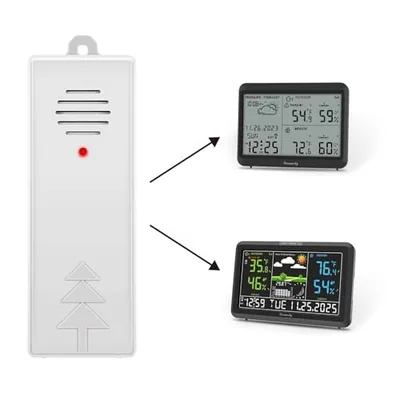
If the link is marginal, move things a little rather than a lot: a few feet sideways, sensor a foot higher, console off the metal shelf. Radio at these frequencies is fussy about the exact path, which means small moves fix big problems.
More sensors, fewer arguments
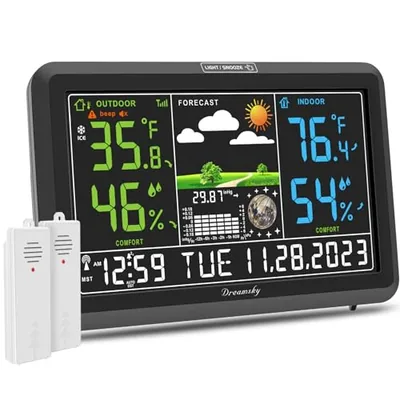
Our stations that support multiple sensors solve the placement dilemma the honest way: measure both spots. One pod in the proper shaded location for the record, one where you actually care, the greenhouse, the nursery, the crawl space, and the console cycles through them.
Multiple sensors also expose placement error. Hang two pods ten feet apart, one shaded and one sunny, and watch them disagree by twelve degrees at 3 p.m. That disagreement is not a defect, it is the whole lesson of this guide displayed on one screen.
Replacement and add-on pods are in our Accessories department, match the model code printed on the console's back, because pairing is per-family, not universal.
Atomic time: what WWVB is and why it syncs at night
The clock in these stations sets itself from WWVB, a low-frequency government time signal broadcast from Colorado. The transmitter is real and singular, and that is the reason sync behaves the way it does across the country.
The signal is faint by design, and it carries best at night, when the atmosphere quiets. A station that fails to sync at 4 p.m. and succeeds at 3 a.m. is behaving normally: give a new station one full night near a window before judging it.
Distance and construction set the odds. Concrete, steel framing and basements attenuate the signal, and the eastern seaboard hears Colorado more faintly than Kansas does. The scale of the system is worth a sentence from its operator:
«NIST radio station WWVB is located near Fort Collins, Colorado.»
NIST, «Radio Station WWVB», read 24 August 2026 · source
«The WWVB broadcasts are used by millions of people throughout North America to synchronize consumer electronic products like wall clocks, clock radios and wristwatches.»
NIST, «Radio Station WWVB», read 24 August 2026 · source
When the time will not sync: the honest checklist
Move the console to a window on the side of the house facing west-to-southwest, away from TVs, routers and LED strips, and leave it overnight. That single step resolves the majority of sync complaints, because interference and attenuation are both local and both movable.
Still nothing after two nights? Set the time manually and let the station keep quartz time, it remains a perfectly good clock, and many buildings simply do not pass 60 kHz indoors. That is physics, not a warranty case, so there is no need to ship boxes back and forth.
One deliberate design note: our alarm clocks do NOT do atomic sync, and we label the auto-set models as preloaded rather than radio-controlled. Only the weather stations listen to WWVB, and this guide is the fine print behind that honesty.
Humidity, pressure and the little forecast icon
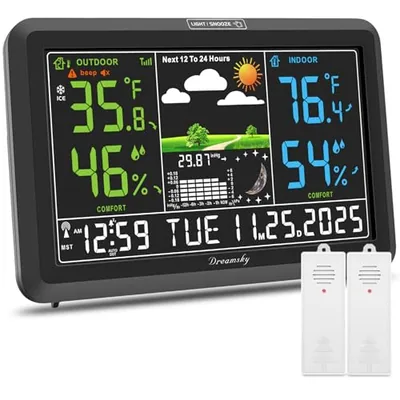
Humidity sensors read the air like thermometers do, so the placement rules carry over: a pod over irrigated flowerbeds reports the flowerbed, not the town. Expect indoor and outdoor humidity to disagree, that disagreement is the reason to measure both.
The forecast icon is a barometer trick: the station watches pressure trends for a day or so after setup and extrapolates twelve to twenty-four hours of sky. It is honest short-range guesswork, right more often than not, and no substitute for a real forecast when weather matters.
Give a new station its calibration day before quoting it. Pressure-trend forecasting needs history, and history takes exactly as long as it sounds.
Batteries, winter and the yearly routine
Cold is the sensor's enemy in one specific way: alkaline cells fade as temperature drops, and a pod that was fine in October drops offline in the first hard freeze. Lithium AA cells hold voltage in the cold and are the winter upgrade worth making in northern states.
Adopt the smoke-alarm calendar: fresh cells in the pod once a year, console batteries checked the same day, mounting bracket screws snugged while you are there. Ten minutes annually keeps the system boring, which is the goal.
After any battery change, re-pair deliberately: power the sensor first, console second, within a minute, and wait for the first reading before walking away. Pairing rituals differ by model, the product page and the manual in the box both spell yours out.
Mounting the pod so it survives the year
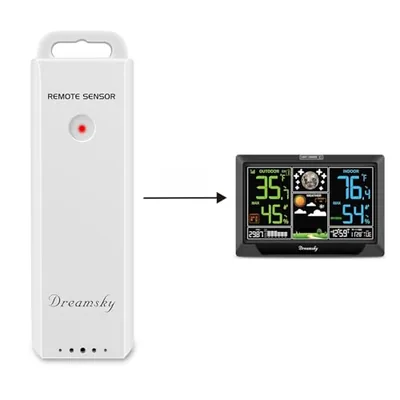
The best spot fails if the mounting does. Screw the bracket to wood or masonry rather than trusting adhesive through freeze-thaw, zip ties on a fence rail work but leave the pod free to swing into the sun on windy afternoons, which shows up as mysterious warm spikes in the log.
Vertical orientation matters on models with a hanging loop: the loop up, vents down, so rain sheds instead of pooling against the battery door. A pod mounted sideways to fit a gap will read fine in June and flood in the first sideways storm.
Leave service access. You will visit this pod every battery day, in gloves, possibly on a step stool, a mounting you can reach in February is worth more than a photogenic one you cannot.
And write the pairing channel on masking tape inside the battery door. Future you, standing in the cold holding fresh cells, will send thanks.
Reading the day's high and low without fooling yourself
A console remembers the day's extremes, and those two numbers are where placement errors become visible. A pod that catches twenty minutes of afternoon sun will post a high that no thermometer in the neighbourhood agrees with, while its overnight low sits perfectly normal. That gap between a plausible low and an implausible high is the classic signature of sun, not of a faulty sensor.
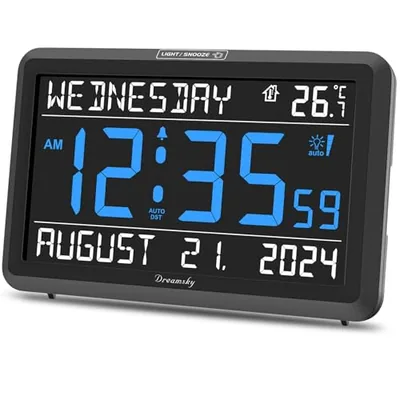
The opposite signature exists too. A pod tucked under a deck or against a foundation wall reports a high that looks reasonable and a low that never falls as far as the yard actually does, because masonry gives back heat all night. If your low is consistently warmer than the forecast low by the same few degrees every night, you are measuring the wall.
Both faults are cured by the same move rather than by calibration: get the pod into open shaded air with a gap behind it. A sensor reporting its own microclimate honestly is not broken, it is simply reporting the wrong place.
When two displays in one house disagree
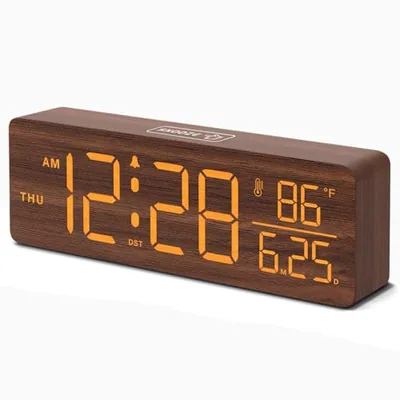
Households with a second console often notice the two do not match to the degree, and assume one is wrong. Usually neither is: each console shows the indoor temperature of its own room, and a hallway console beside a stairwell genuinely lives in different air than a bedroom console beside a window.
The outdoor numbers should agree, because both are listening to the same pod. If they do not, one console has picked up a neighbouring channel or lost its pairing and is still showing a stale reading. The fix is to re-pair the one that disagrees and watch it for a full cycle rather than power-cycling both in frustration.
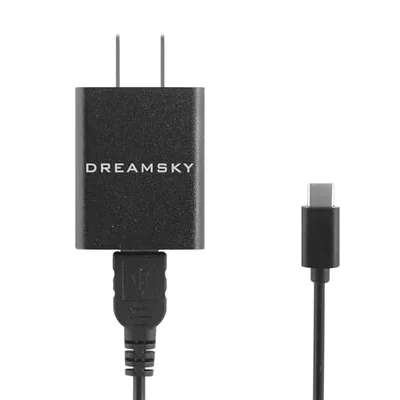
Where a genuine second opinion is wanted outdoors, the answer is a second pod on its own channel rather than a second console. Two pods let you compare the shaded north side against the exposed south side, which is a real measurement rather than an argument about which display to believe.
The accuracy checklist on one card
North side, shaded, head height, air gap, away from vents and grills. Walk-test the wireless path before mounting. Give WWVB a night by a window, and set time manually without shame if your building eats the signal.
Use a second sensor where you actually care instead of arguing with the first one's spot. Lithium cells for winter, yearly battery day, deliberate re-pairing.
Do all that and the numbers on the console become what you bought: your yard's actual weather, reported by instruments that were never the problem.